
6 Warning Signs It's Time to Replace Your Water Filter
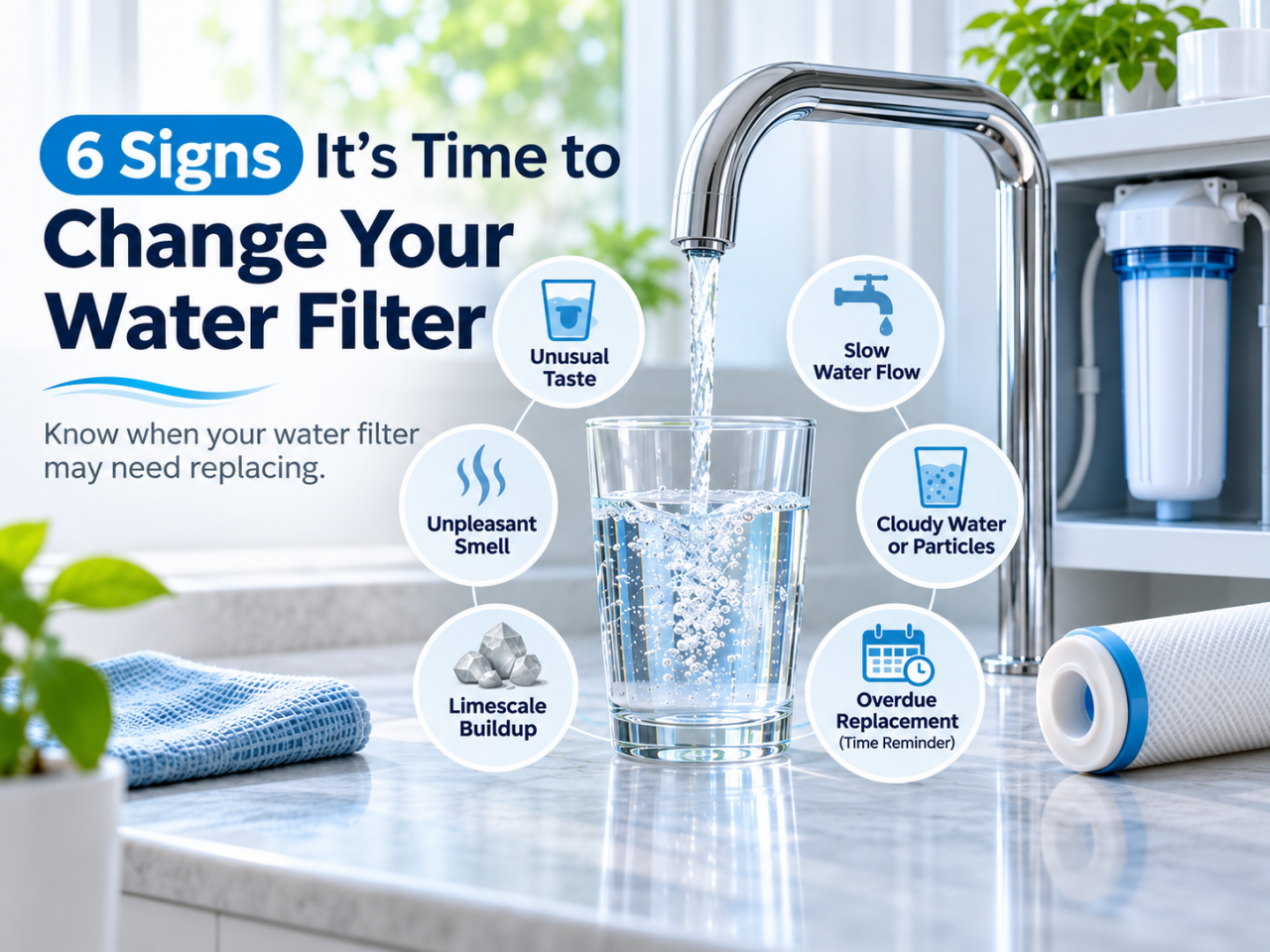
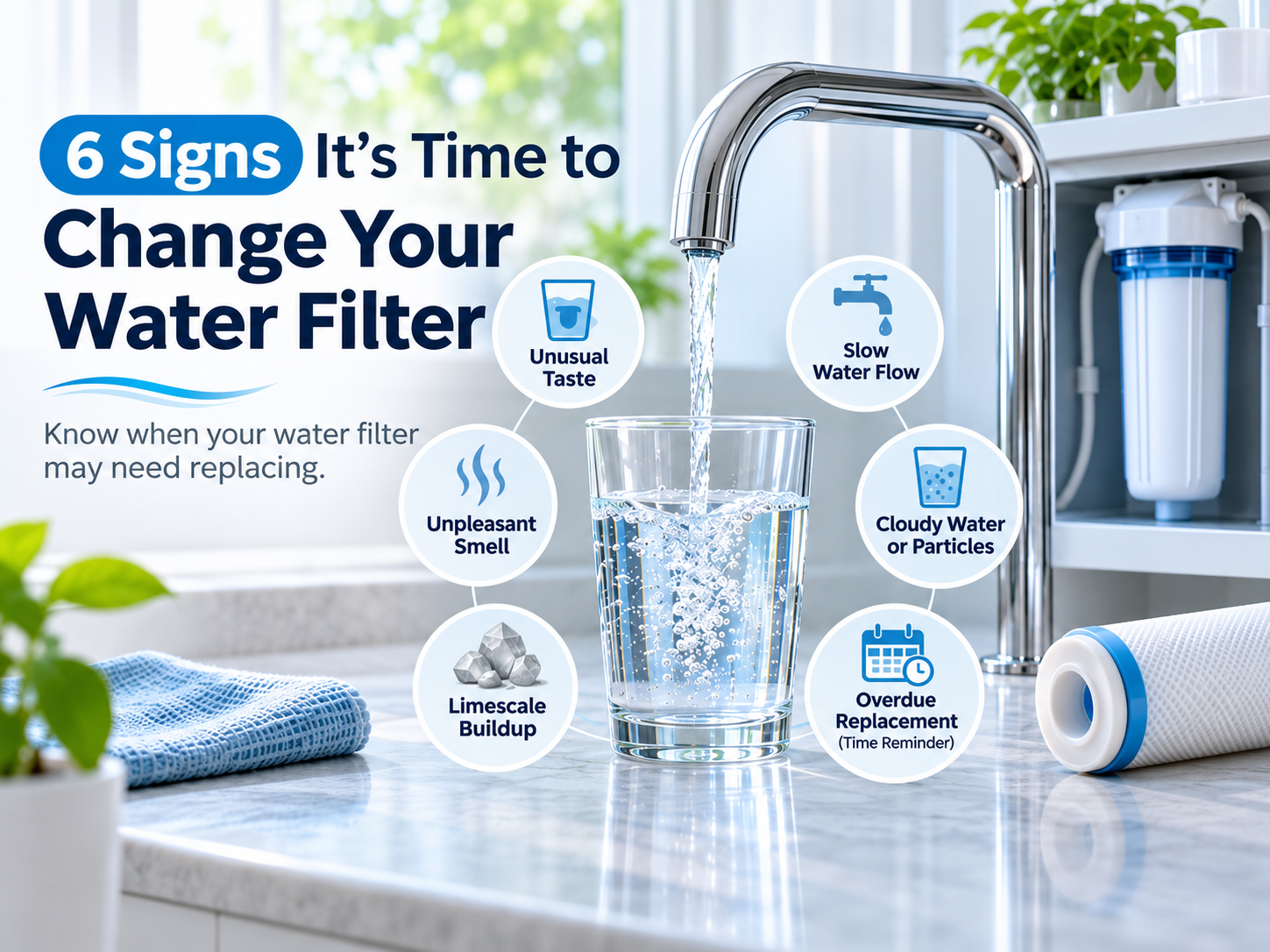
Is your water filter still doing its job? Discover six warning signs that indicate it may be time for a replacement.
Clean, fresh-tasting water is something we often take for granted. Whether it's for drinking, cooking, or brewing your favourite cup of coffee, water quality plays an important role in our daily lives. While water filtration systems help reduce unwanted impurities and improve water quality, water filters don't last forever. Over time, filters accumulate sediment, and filtration media gradually reach their treatment capacity. According to NSF, a global public health and safety organisation, filter media can become saturated with contaminants or clogged with debris, affecting filtration performance. The tricky part? A filter that needs replacing doesn't always show obvious warning signs.
So, how do you know when it's time for a change?
Here are six warning signs that your water filter may need replacing and why timely maintenance matters.
1. Your Water Starts Tasting Different
Have you noticed that your drinking water suddenly tastes unusual? One potential sign that your water filter may need attention is a noticeable change in water taste. Activated carbon filters are commonly used to reduce chlorine and other substances that affect drinking water's taste and smell. However, as the filtration media become exhausted, their ability to reduce these substances may decline.
You might notice:
-A stronger chlorine taste
-An unusual or unpleasant aftertaste
-Water that no longer tastes as fresh as before
- Although changes in taste can originate from the incoming water supply or plumbing, they are worth investigating.
Anzzio's Recommendation:
For households looking to maintain fresh-tasting drinking water, the Anzzio EQ3 Household Water Filter features a three-stage filtration system designed to reduce dirt, chlorine, unpleasant tastes, odours, and organic impurities.
Its convenient twist-and-replace cartridge design also makes routine maintenance straightforward.
2. The Water Flow Becomes Noticeably Slower
Does filling a glass of water seem to take longer than usual?
A noticeable drop in water flow from your filtered water tap or dispenser could indicate that your filter cartridge is becoming clogged. As water passes through a filtration system, sediment filters capture dirt, rust particles, and other suspended impurities. Over time, these particles can accumulate and restrict water flow. NSF identifies a significant reduction in water flow as one of the more noticeable indications that a mechanical filter has become clogged.
This may result in:
-Reduced water pressure at the filtered outlet
-Slower water dispensing
-Longer waiting times when filling bottles or containers
- However, reduced water flow doesn't always mean the filter is clogged. Low incoming water pressure, blocked tubing, or other system issues could also be responsible. If the water flow remains slow after checking these factors, it may be time to inspect or replace your filter cartridge.
Anzzio's Recommendation:
The Anzzio EQ2 Household Water Filter features a dual-stage filtration system designed to reduce dirt, chlorine, unwanted tastes, odours, and organic impurities. Its replaceable cartridges provide a practical filtration solution for everyday household use.
3. Your Water Develops an Unpleasant Smell
Fresh drinking water should not develop an unexpected or unpleasant odour. If your filtered water begins to smell noticeably different, it may indicate an issue with your filtration system or water supply. Activated carbon filtration is commonly used to improve drinking water's taste and smell by reducing chlorine and certain other substances. However, once the carbon media reach their effective capacity, their ability to reduce these substances may diminish.
Common warning signs include:
-
-A stronger-than-usual chlorine smell
-
-Musty or earthy odours
-
-Other unfamiliar smells coming from the filtered water
An unusual smell does not necessarily mean that the filter is responsible. Changes in the incoming water supply, plumbing conditions, or other water quality issues can also affect odour.
If your water develops a persistent or unusual smell, have the water supply and filtration system checked rather than assuming a cartridge replacement will resolve the issue.
Anzzio's Recommendation:
For offices, restaurants, and commercial beverage applications, the Claroswiss 170F Ion Exchange Carbon Filter is designed to reduce organic contaminants while improving water taste and smell. Its activated carbon filtration makes it particularly suitable for applications sensitive to chlorine and unpleasant odours.
4. Your Filtered Water Appears Cloudy or Contains Visible Particles
Have you noticed tiny particles floating in your drinking water or an unusual change in its appearance?
Visible sediment, rust-coloured particles, or persistent cloudiness can indicate a problem with your water supply or filtration system. Sediment filters are designed to capture suspended particles before water reaches your drinking tap or connected equipment. When a filter becomes damaged, improperly fitted, or heavily clogged, its performance may be affected.
Keep an eye out for:
-
-Small visible particles in your drinking water
-
-Unusual discolouration
-
-Persistent cloudiness that was not present previously
Occasional cloudiness may be caused by harmless air bubbles, particularly if the water clears after standing for a short period. However, persistent discolouration or visible particles should be investigated rather than ignored.
Anzzio's Recommendation:
The Anzzio EQ4 Household Water Filter provides a configurable four-stage filtration system designed to address common household water quality concerns, including sediment, chlorine, unpleasant tastes, and odours. Its under-sink design also provides a convenient filtration solution without taking up valuable countertop space.
5. Limescale Is Becoming More Noticeable on Your Equipment
Have you noticed white, chalky deposits appearing around your coffee machine, kettle, or other water-using appliances?
These deposits are commonly known as limescale, which forms when minerals associated with water hardness accumulate on surfaces, particularly during heating.
According to the U.S. Geological Survey (USGS), heating hard water can cause calcium carbonate deposits to form. Over time, these deposits can reduce heating efficiency, clog pipes, and increase equipment maintenance requirements.
For coffee shops, restaurants, and other foodservice businesses, excessive limescale can become more than just a cleaning inconvenience.
Over time, limescale buildup may contribute to:
-
-Reduced heating efficiency
-
-Blocked water pathways
-
-Increased equipment maintenance
-
-Inconsistent appliance performance
If your water softening filter is approaching the end of its treatment capacity, its ability to reduce hardness may decline.
However, limescale alone does not confirm that your filter requires replacement. It is important to check water hardness, filter capacity, and the condition of your equipment.
Anzzio's Recommendation:
The Claroswiss 250C Coffee Water Filter is specifically designed for coffee applications.
By reducing water hardness and unwanted impurities, it helps minimise limescale formation, protect coffee equipment, and support consistent beverage quality. For cafés and coffee enthusiasts, maintaining an appropriate water filtration system can contribute to better-tasting coffee and more reliable equipment performance.
6. You Can't Remember the Last Time You Replaced Your Filter
Sometimes, the biggest warning sign is simply not knowing when your filter was last changed.
Unlike changes in water taste, smell, or flow, an exhausted filter may not provide obvious warning signs. Your water might still look clear and taste normal even when the filter has exceeded its recommended service life.
Every filtration cartridge has a recommended replacement interval or treatment capacity, which may vary depending on factors such as:
-
-Daily water consumption
-
-Water quality
-
-Filter type and capacity
-
Manufacturer recommendations
According to the Centers for Disease Control and Prevention (CDC), water filters require regular maintenance and replacement according to manufacturers' instructions to help maintain proper operation and prevent microbial growth. For households, keeping track of filter replacement dates is an easy way to stay on top of water filtration maintenance. For commercial establishments, where water consumption may be significantly higher, monitoring usage and maintaining a replacement schedule is particularly important.
Anzzio's Recommendation:
Whether you're using the Anzzio EQ2, EQ3, or EQ4 filtration system, following the recommended replacement schedule helps maintain consistent filtration performance. Don't wait until noticeable water quality issues arise before checking your filter.
How Often Should You Replace Your Water Filter?
There isn't a universal replacement schedule that applies to every water filter.
The appropriate replacement frequency depends on the filtration technology, cartridge capacity, water quality, and daily consumption.
For example, a filter serving a busy café may reach its treatment capacity much sooner than one used in a small household.
NSF explains that replacement schedules may be based on the volume of water treated or an estimated service period. To maintain filtration effectiveness, filters should be replaced according to the manufacturer's recommendations. [1]
The best approach is to follow the manufacturer's recommended replacement interval or treatment capacity, whichever limit is reached first, while monitoring your system for unusual changes.
Replacing your water filter on time helps maintain filtration performance and reduces the risk of operating with an exhausted or clogged cartridge.
Don't Wait Until Your Water Quality Changes!
Your water filter works quietly behind the scenes, helping improve the water you drink, cook with, and use in beverage preparation.
However, even a high-quality filtration system requires regular maintenance to perform as intended.
Recognising these six warning signs can help you identify potential problems early, but preventive filter replacement remains the most reliable approach.
At Anzzio Filtration, we understand the importance of having dependable water filtration solutions for homes, offices, cafés, and commercial establishments.
From residential drinking water filters to specialised commercial filtration systems, Anzzio offers a range of solutions designed for different water treatment needs.
Is It Time to Replace Your Water Filter?
Don't wait for noticeable changes in taste, odour, or water flow before reviewing your filtration system. Explore Anzzio's range of water filtration solutions or get in touch with the team for assistance in identifying the appropriate replacement filter for your needs.
Explore Anzzio's Water Filtration Solutions
Better Water Starts with Proper Filtration and Timely Maintenance.
References
[1] NSF. Changing Water Filters.
https://www.nsf.org/consumer-resources/articles/changing-water-filters
[2] Centers for Disease Control and Prevention (CDC). About Choosing Home Water Filters.
https://www.cdc.gov/drinking-water/prevention/about-choosing-home-water-filters.html
[3] U.S. Geological Survey (USGS). Hardness of Water.
https://www.usgs.gov/water-science-school/science/hardness-water
[4] Centers for Disease Control and Prevention (CDC). Preventing Waterborne Germs at Home.
https://www.cdc.gov/drinking-water/prevention/preventing-waterborne-germs-at-home.html